Give the fruit a good partner
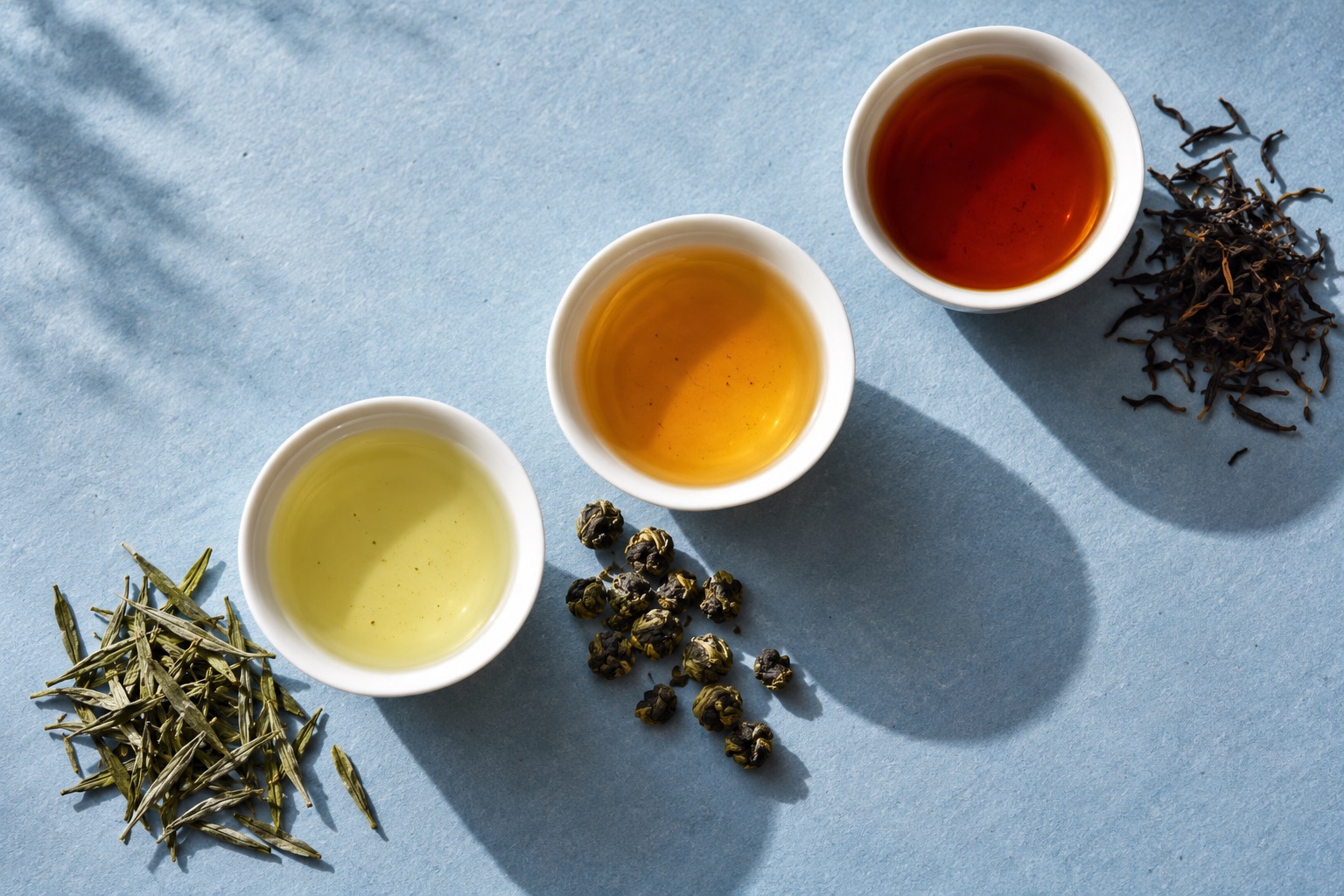
A delicate peach and a sharp orange don’t ask for the same thing. Think about the flavor you want underneath the fruit: something light and floral, something rounded, or a stronger, more robust base.
| Base | What it can bring | Try it with |
|---|---|---|
| Jasmine green tea | Floral, light, fragrant | Orange, peach |
| Oolong tea | Floral to toasted, depending on style | Peach, pear |
| Black tea | Body and a more assertive tea flavor | Lemon, berries |
| Pure hibiscus | Tartness and a deep ruby color | Strawberry, orange |
Start with the package
Water temperature and steeping time vary by tea. Use your tea’s own directions for your first batch. Strain or remove the leaves before cooling: leaving them in can make the flavor more bitter or drying than you intended.
Stronger doesn’t have to mean longer
If your drink tastes watery after you add ice and fruit, try using a little more tea in the same amount of brewing water next time. Simply leaving leaves to steep much longer can pull the balance in the wrong direction.
Make caffeine a deliberate choice
Green, black, and oolong tea contain caffeine unless decaffeinated. Decaffeinated doesn’t necessarily mean completely caffeine-free. Pure hibiscus contains no tea leaves; for any mixed product, check the full ingredient list.
Keep a tiny tasting note
Write down the tea, fruit, amount of water, and what you’d change. “More peach, less syrup” is enough. Your own taste is more useful than a rigid rule about the perfect pairing.
Explore more field guides ↗