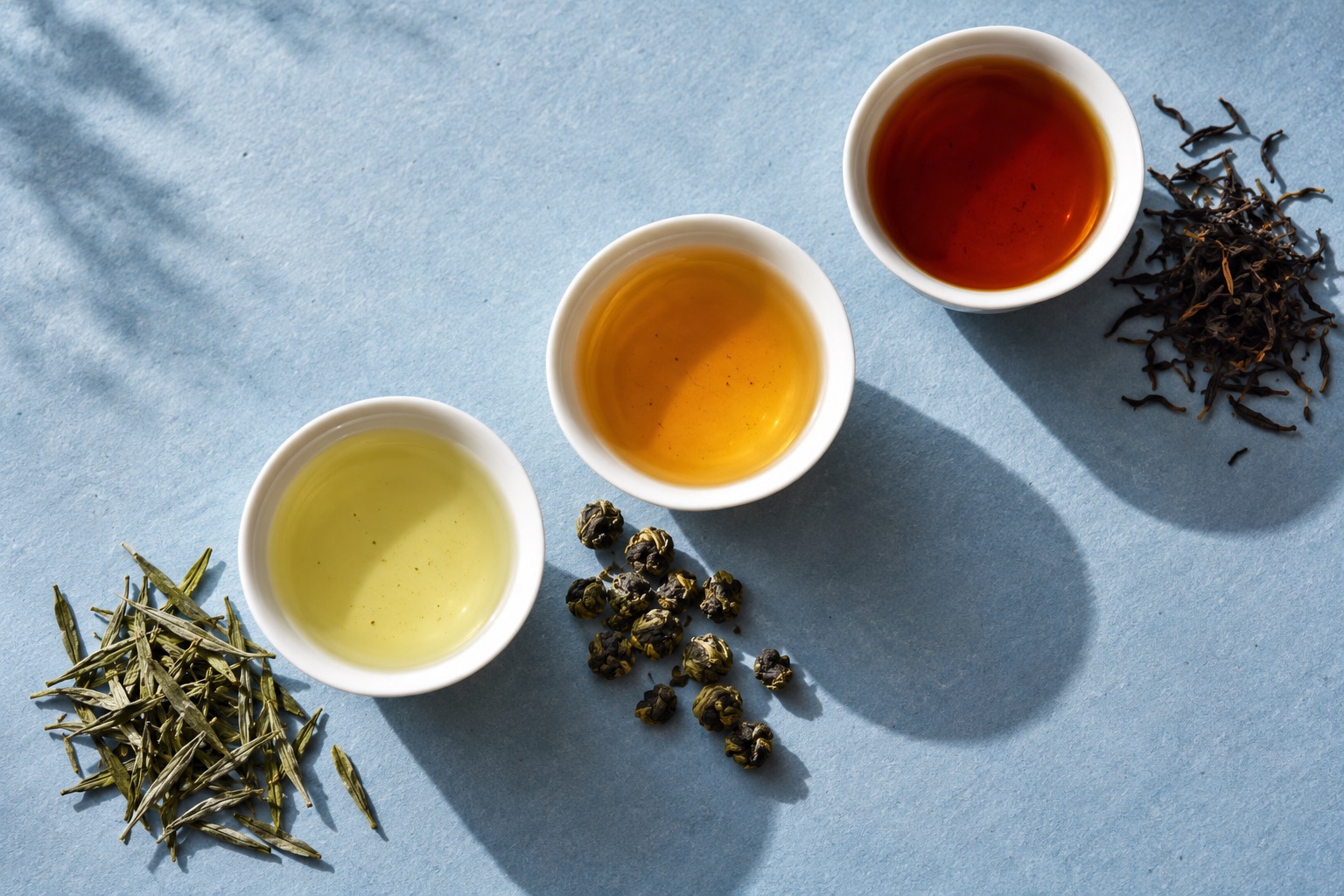
The bag is only one part of the decision
A good starting point for iced fruit tea can come from either loose leaves or a tea bag. Before upgrading your equipment, ask a more useful question: can you repeat the tea base you like once fruit and ice join the glass?
This guide compares preparation choices, not brands in a taste test. Our editorial recommendation is to choose the format that makes measuring, brewing and repeating a batch easiest for you. Start with a tea you enjoy, then work on the finished drink.
Look inside the format
A flat bag and a roomy sachet need not contain the same kind of leaf. Harney & Sons describes smaller tea particles in its discussion of conventional bags and says it uses the same blends in its sachets and loose tea, with a few exceptions. That is a statement about its own range, not a rule for every producer. Read the brand’s explanation ↗
For shopping, compare the named tea and ingredient list before comparing the container. A jasmine green tea and a fruit-flavored black blend change more than packaging. If you want to investigate format itself, look for the same tea offered both loose and bagged; otherwise, describe your result as a comparison of two products.
What changes at the counter?
| Choice | Useful when | Plan for |
|---|---|---|
| Loose leaf | You want to adjust the amount in small steps. | Measuring tea and cleaning an infuser or strainer. |
| Tea bags | You want to repeat a batch by counting portions. | Checking how much water each bag is meant to brew. |
| Sachets | You prefer a pre-portioned tea available in this format. | Reading its own directions; a different shape does not establish a different dose. |
Make the first brew repeatable
The UK Tea & Infusions Association recommends careful measuring and following the package’s temperature and brewing-time instructions. Its reference chart gives different times for different teas. There is no reason to assign every loose tea one timer and every bag another. See its brewing guidance ↗
For your own notes, record the product, the amount of tea and the water volume. If a loose tea lists grams, a scale makes that instruction easy to repeat. For bags, record the count and the package’s serving volume. “One mug” is a poor reference if tomorrow’s mug is larger.
Leave room for fruit and ice
Ice adds water as it melts; juice adds another liquid before that even happens. A tea base you like on its own may therefore need a different starting concentration for the finished drink.
Harney’s hot-brewed iced-tea method uses half the usual brewing water to make a concentrate, followed by cold water and ice. It describes this approach for loose tea, sachets and bags alike. Treat that as the company’s preparation method, not a universal fruit-tea ratio. Read the iced-tea method ↗
Our suggestion: decide on the finished glass before changing formats. Write down how much brewed tea, fruit or juice, and ice you used. If you change all three between batches, you will have little basis for blaming the bag or crediting the loose leaves.
Try a comparison you can learn from
- Pick two teas with as much in common as possible. Note any differences in blend or ingredients.
- Prepare each using its own directions and record the measurements.
- Compare the tea bases first, then use equal portions with the same fruit addition and ice amount.
- Write one specific observation: tea character, fruit prominence, or whether you would adjust the next batch.
This is an editorial comparison exercise, not a tested recipe or a controlled product trial. We have not tasted these products side by side.
For an everyday glass, ease of repeating your preferred preparation is a useful reason to choose bags. For small adjustments to tea quantity, loose leaf offers flexibility. Once the format is settled, explore which tea base suits your fruit and how to balance the finished drink.
Explore more field guides ↗