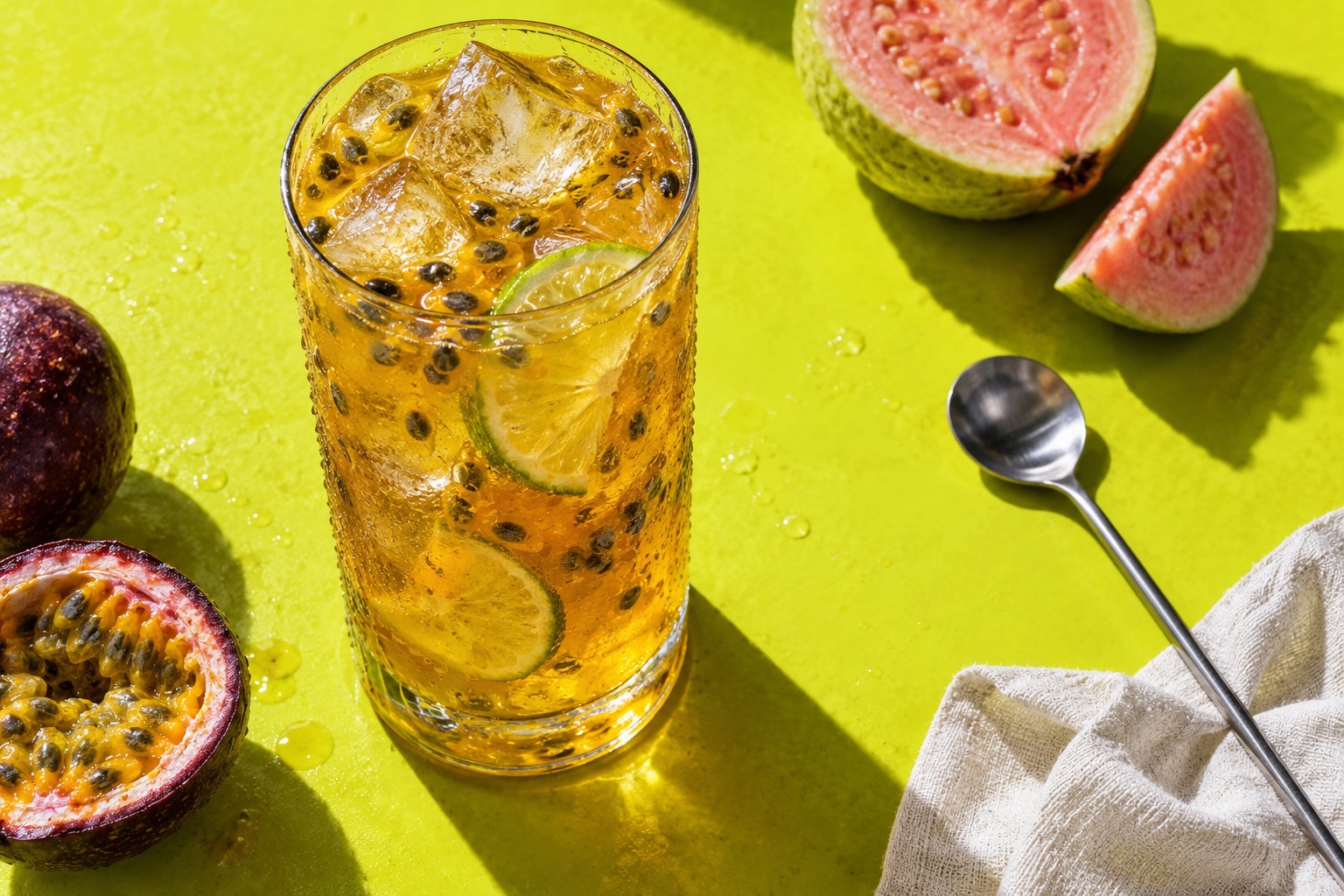
Start with the sip you want
Do you want fruit pieces to eat between sips, a pourable tea-and-juice drink, or a glass with more pulp and body? That decision is more useful than asking which fruit format is universally best. Fresh fruit, juice and purée solve different preparation problems, and you can combine them.
Our editorial approach is to choose the texture first, then adjust the amount. Here is a practical way to think about the three formats before reaching for the sweetener.
| Format | Choose it for | Watch for |
|---|---|---|
| Fruit pieces | Visible slices, chunks or gently muddled fruit. | Pits, seeds and pieces that make drinking awkward. |
| Juice | An easily measured liquid addition. | Extra liquid changing the tea-to-fruit balance; pulp varies. |
| Purée | Blended fruit texture distributed through the drink. | Thickness and any sweeteners already in a prepared product. |
Fresh fruit: decide whether it is garnish or ingredient
A peach slice at the rim and mashed peach in the bottom of the glass perform different jobs. For fruit you want to chew, keep manageable pieces. For fruit you want to mix through the tea, try gently mashing a small portion first. Strain out unwanted solids if you prefer a less pulpy drink.
Make the preparation part of your note: “sliced strawberry” is a different starting point from “mashed strawberry.” Adding more decorative slices may not give you the same result as changing how the fruit is prepared. Our peach-and-oolong recipe idea uses both reserved slices and muddled fruit to illustrate those separate roles.
Juice: measure the pour, not just the fruit name
Juice is convenient when you want to record a repeatable volume. It also takes up space that might otherwise hold tea. Before adding a large splash, decide how much of the finished glass should remain brewed tea; leave room for ice as well.
Read the actual product rather than treating every carton with a pineapple picture as interchangeable. Dole’s US page for its 6 fl oz 100% Pineapple Juice cans lists pineapple juice and ascorbic acid. Its nutrition panel lists 22 grams of total sugars and zero added sugars per 177 mL can. This is a useful example of why “no added sugar” does not mean zero total sugar. It is product-specific label information, not a measurement of your finished tea. See the Dole label information ↗
Purée: blended fruit and prepared drink bases differ
If you blend fruit at home, you know what went into that batch. A commercial product labeled fruit purée can include other ingredients. Monin’s US Mango Purée page, for example, lists sugar, water, mango purée and mango juice concentrate among its ingredients. The company also says the physical label may differ from the website and should be checked. See Monin’s ingredients and label notice ↗
That makes the label a preparation tool. If your purée already contains sugar, mix it into the tea before deciding whether to add syrup. If the drink feels too thick for the style you want, use less purée in the next glass, or reserve some tea to loosen the mixture. A sweetened drink base and plain blended fruit should not be assumed to work in identical amounts.
Two questions that prevent a muddled comparison
- Am I comparing the same fruit? Switching from fresh peach to pineapple juice changes both format and fruit. That may make a lovely drink, but it will not isolate the effect of juicing.
- Am I changing sweetness at the same time? Keep track of sweetened preparations before adding a separate sweetener. Taste the mixed drink first.
The commercial labels above illustrate different formulations; they are not a head-to-head tasting or a ranking. For a simple comparison at home, keep the tea base and serving size consistent and change one fruit preparation at a time.
Prep only what you can handle properly
The FDA recommends washing produce under running water before preparation, without soap, and keeping perishable produce such as berries at 40°F or below. Refrigerate produce purchased pre-cut, and keep raw fruit and its utensils separate from raw meat, poultry and seafood. For packaged juice and purée, follow the container’s storage directions, including after opening. Read the FDA’s produce guidance ↗
Preparation suggestions are editorial starting points, not kitchen-tested recipes. Product examples use published labels; no independent product tasting was conducted.
Explore more field guides ↗