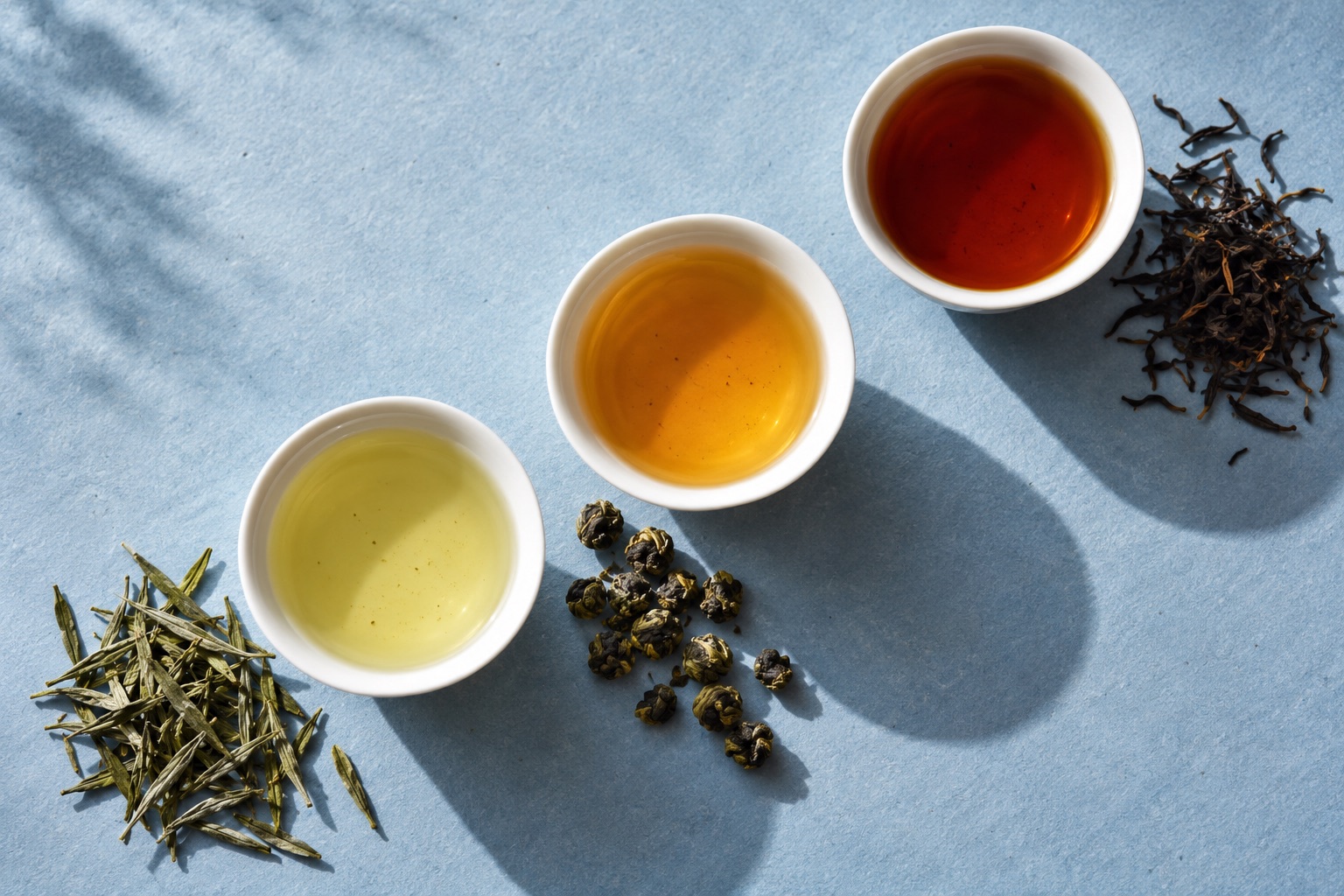
The word oolong leaves a lot unsaid
Peach oolong can begin with a tea described as floral and delicate, or one described as toasted and reminiscent of dried fruit. Before changing the peach or reaching for more syrup, look at the tea itself. Choosing an oolong is a chance to decide which part of the drink you want to notice.
For a first purchase, look for a named tea with a clear description of its processing and flavor. Use “floral” and “roasted” as clues to explore, rather than two boxes that every oolong must fit into.
Read oxidation and roast as separate information
The UK Tea & Infusions Association identifies oolong as partially oxidized and describes a range of styles, including lightly oxidized Bao Zhong. Oxidation is one part of processing that helps distinguish teas; an oolong label alone does not specify a single flavor. Read the association’s tea-type guide ↗
Roasting is a separate heat treatment. A useful product example is Rishi’s Iron Goddess of Mercy: the company specifies medium oxidation and moderate roasting over radiant heat. Those are two descriptions of its preparation, not interchangeable words for how long you should steep it. See Rishi’s processing description ↗
Ask a seller about both when the package is vague. “Light” might refer to the roast, oxidation or the seller’s impression of the cup. A tea’s name is more useful when it comes with those details.
Two labels that show the range
| Published example | What the seller says | What to explore |
|---|---|---|
| Rishi Bao Zhong | Lightly oxidized, with floral descriptions including lilac and orchid. | A tea-led glass with a small fruit addition. |
| Rishi Iron Goddess of Mercy | Medium oxidation and moderate roast; descriptions include buckwheat, dried apricot and caramel. | How a toasted tea character works alongside fruit. |
The flavor descriptions above come from the seller, not an independent tasting. Rishi lists only oolong tea in the ingredients for both products. On these labels, the flower and food names describe perceived flavor; they are not listed additions. Always check the ingredient list separately when choosing a flavored blend. Bao Zhong details ↗ · Iron Goddess details ↗
Choose a fruit direction, then leave room to adjust
Our editorial starting point for a floral oolong is a small amount of peach or pear, with the tea making up most of the liquid. The question to ask is whether you can still notice the tea’s aroma after adding fruit. If it disappears, try less fruit before assuming you need a different tea.
For a roasted oolong, peach is also a useful first experiment: keeping the fruit familiar makes the change of tea easier to notice. Pineapple offers another direction if you want to explore a sharper fruit contrast. Neither pairing is a rule or a promise that every roast will work with every fruit.
The form of the fruit matters too. Peach slices, peach purée and sweetened peach syrup are different additions. Our fruit-format guide helps separate texture from sweetness and added liquid.
Compare the teas before building a full drink
These pairing and comparison suggestions are untested editorial starting points, not kitchen-tested recipes or a product ranking.
- Brew each tea to its own directions. Record the leaf amount, water volume, temperature and steep time. Remove the leaves, then cool and refrigerate for an iced comparison.
- Keep a plain sample of each. Taste them at the same serving temperature before adding fruit. Write down what you notice in your own words.
- Use the same fruit preparation. Add equal small amounts from the same batch of prepared peach to equal volumes of each tea. Leave syrup and lemon out of this first comparison.
- Finish the version you prefer. Add ice and any desired sweetness, then taste again. Note the finished proportions so the next glass starts from something repeatable.
This compares two finished tea bases. Different cultivars, origins and processing choices may all contribute, so it does not isolate roasting as the cause of every difference. That is fine for choosing a drink you enjoy.
Make your next order more specific
Instead of asking only for “oolong for fruit tea,” ask for a floral or toasted direction, a clear ingredient list, and brewing instructions for the product. If buying from a café, ask which oolong they use and whether fruit arrives as pieces, juice or a sweetened preparation. Those details make a menu name much easier to interpret.