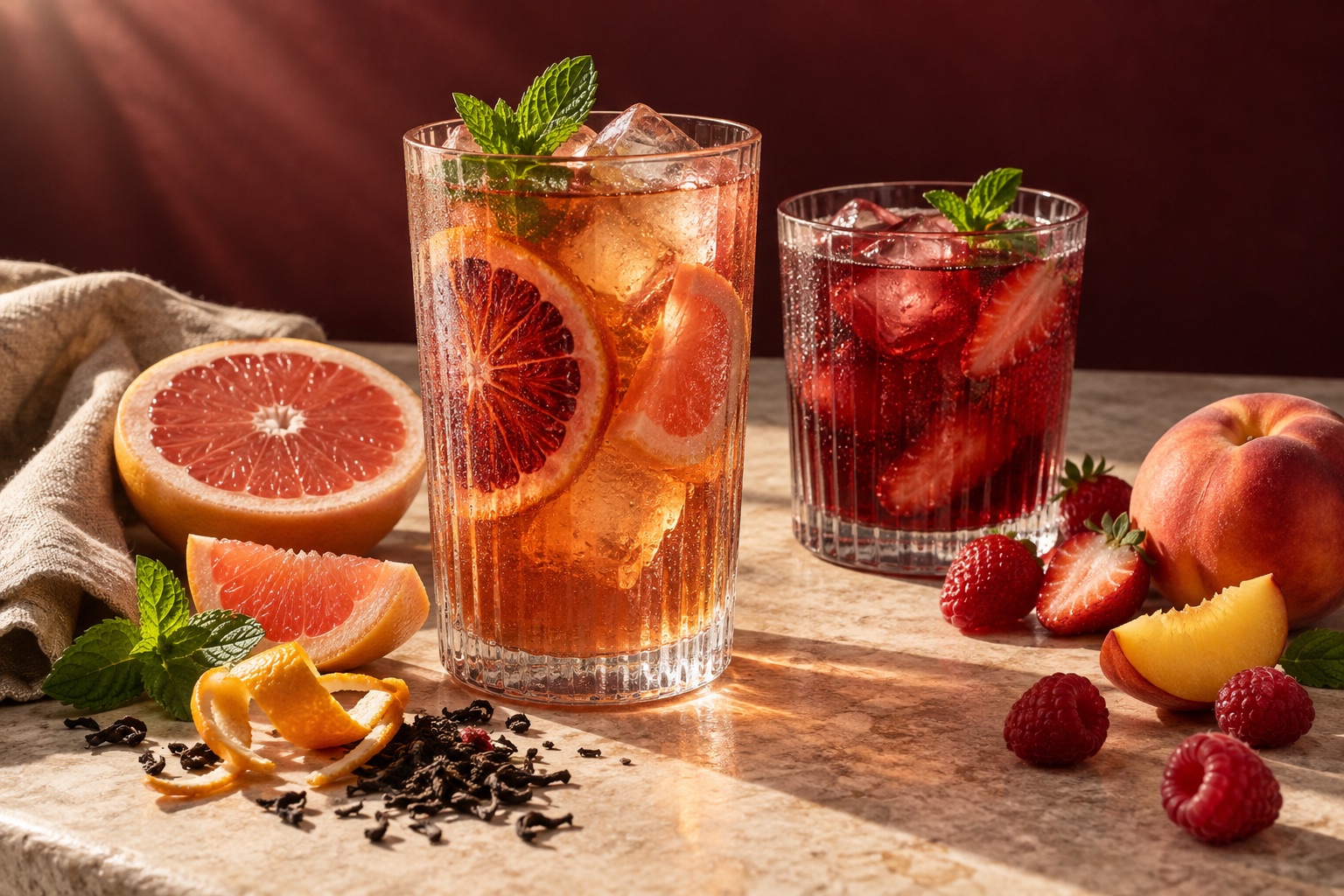
Two different drinks, one familiar name
“Fruit tea” can describe tea leaves paired with fruit, or a drink made by infusing fruit and other botanicals in water. Both belong here. Knowing which you’re making helps you choose the flavor, brewing method, and ingredients you actually want.
Tea leaves + fruit
Green, black, oolong, and white tea all come from the tea plant, Camellia sinensis. Their different processing styles create different flavor profiles. Add fresh peach to oolong or orange to jasmine green tea, and the tea remains the backbone of the drink.
These teas generally contain caffeine. Fruit does not remove it, and a drink’s color or sweetness won’t tell you how much is present.
Fruit and botanical infusions
A blend of fruit, hibiscus, or other herbs can be steeped without any tea leaves. This is often called an herbal infusion or tisane. Read the ingredients rather than relying on the name: some products combine herbs and fruit with caffeinated tea or other caffeinated ingredients.
Fresh, dried, or freeze-dried?
Fresh fruit is easy to slice, muddle, and adjust. Dried fruit is common in steeping blends. Freeze-dried fruit or prepared tea blends offer another format; how they’re made and what they contain varies by product. A format alone doesn’t tell you the sugar level, caffeine content, or taste.
For packaged mixes, check the ingredients, preparation directions, and serving information. For homemade drinks, start with a clear tea base and add fruit a little at a time.
Your first glass
If you like a fragrant tea, try citrus and jasmine. For something rounded, start with peach and oolong. For a drink without tea leaves, explore strawberry and pure hibiscus.
Explore more field guides ↗